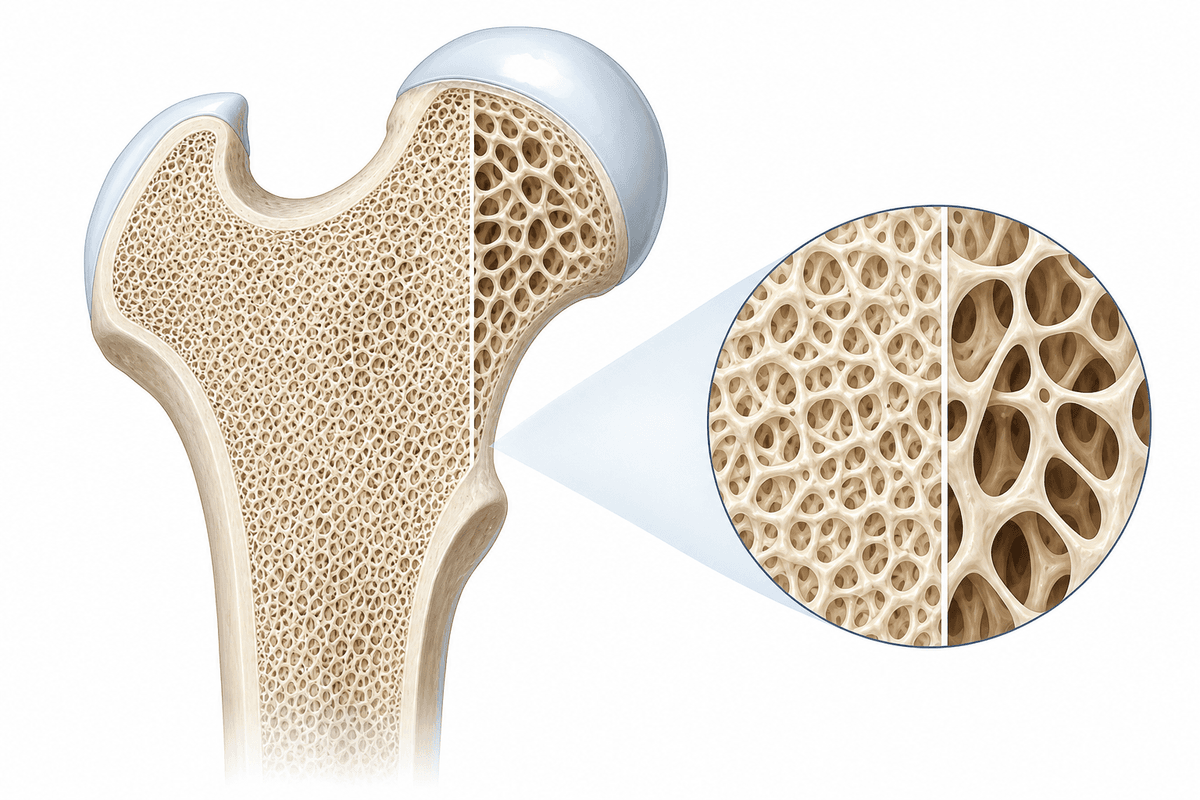
Treated by Dr. Hari Prakash at Dr Hariprakash
Osteoporosis in Hyderabad is a progressive bone disease characterized by decreased bone density and increased fracture risk, particularly affecting postmenopausal women and older adults. The condition weakens bones, making them fragile and more susceptible to breaks, even from minor falls or stress. Dr Hari Prakash provides comprehensive osteoporosis evaluation and evidence-based treatment protocols tailored to each patient's bone health needs.
Age-related bone loss occurring naturally, most commonly in postmenopausal women due to estrogen deficiency and in older men due to declining testosterone levels and calcium absorption.
Bone loss resulting from underlying medical conditions such as hyperthyroidism, rheumatoid arthritis, chronic kidney disease, or prolonged use of corticosteroids and other medications that affect bone metabolism.
Rare form affecting children and young adults without identifiable cause, characterized by sudden onset of bone pain and fractures during periods of rapid growth, often resolving spontaneously after puberty.
Multiple factors can contribute to the development and progression of this condition.
Osteoporosis develops gradually. Recognising symptoms early gives you more treatment options.
From conservative to surgical — we always start with the least invasive option first.
A structured, patient-first approach from first visit to full recovery.
Dr Hari Prakash conducts detailed medical history evaluation, physical examination, and orders DEXA scan to measure bone mineral density at hip and spine. Laboratory tests assess calcium, vitamin D, thyroid function, and bone turnover markers to identify underlying causes and fracture risk.
Based on DEXA results, fracture history, and individual risk factors, Dr Hari Prakash develops a customized treatment protocol combining lifestyle modifications, nutritional optimization, and appropriate pharmacological therapy. He discusses treatment options, expected outcomes, and potential side effects with each patient.
For patients with acute vertebral compression fractures or fragility fractures requiring surgical stabilization, Dr Hari Prakash performs minimally invasive vertebroplasty, kyphoplasty, or advanced fracture fixation using osteoporosis-specific techniques and implants to ensure optimal healing and stability.
Dr Hari Prakash schedules regular follow-up appointments with repeat DEXA scans every 1-2 years to monitor treatment response, adjusts medications as needed, reinforces fall prevention strategies, and ensures continued adherence to bone-strengthening lifestyle modifications for sustained bone health.
What to expect at each phase of recovery.
Patients begin prescribed medications, implement dietary changes with calcium and vitamin D supplementation, start supervised exercise programs, and undergo education on fall prevention. Pain management for existing fractures is optimized, and baseline response to therapy is monitored.
Bone density begins to stabilize or improve with continued therapy. Patients progress in exercise capacity with increased strength and balance. Medication tolerance is assessed, and adjustments are made if needed. Lifestyle modifications become habitual, and fracture risk starts decreasing.
Long-term bone health maintenance with ongoing medication, sustained lifestyle modifications, and periodic DEXA scans to track progress. Patients achieve optimal bone density improvements, reduced fracture risk, maintained mobility and independence, with treatment adjustments based on continued monitoring and evolving medical guidelines.
Most patients experience measurable improvement in bone mineral density within 12-24 months of treatment, with bisphosphonates typically increasing spine density by 5-8% and hip density by 3-5%, significantly reducing fracture risk.
Effective osteoporosis treatment reduces vertebral fracture risk by 40-70%, hip fracture risk by 40-50%, and non-vertebral fracture risk by 20-35%, enabling patients to maintain active lifestyles with greater confidence and independence.
Patients report decreased pain from existing fractures, improved mobility and physical function, enhanced confidence in daily activities, and reduced fear of falling, leading to better overall well-being and social engagement.
Early intervention prevents progressive spinal compression fractures that cause height loss, kyphosis (hunched posture), and chronic pain, preserving normal spinal alignment and preventing the cascading effects of vertebral collapse.
Untreated osteoporosis leads to progressive bone weakening with increasing fracture risk, particularly debilitating hip and spine fractures that can result in chronic pain, disability, and loss of independence. Hip fractures carry 20% mortality within one year and 50% of survivors never regain full mobility. Vertebral compression fractures cause height loss, spinal deformity, chronic pain, and respiratory compromise, significantly diminishing quality of life and increasing mortality risk.
Consult Dr Hari Prakash if you are a postmenopausal woman, man over 50, or have risk factors including family history, previous fracture from minor trauma, long-term steroid use, or conditions affecting bone health. Seek immediate evaluation if you experience sudden severe back pain, height loss, or fracture from minimal impact. Early screening with DEXA scan is recommended for women over 65, men over 70, and younger individuals with significant risk factors to detect osteoporosis before fractures occur.
Early treatment means more options and better outcomes. Book a consultation to understand your condition and explore the right path forward.