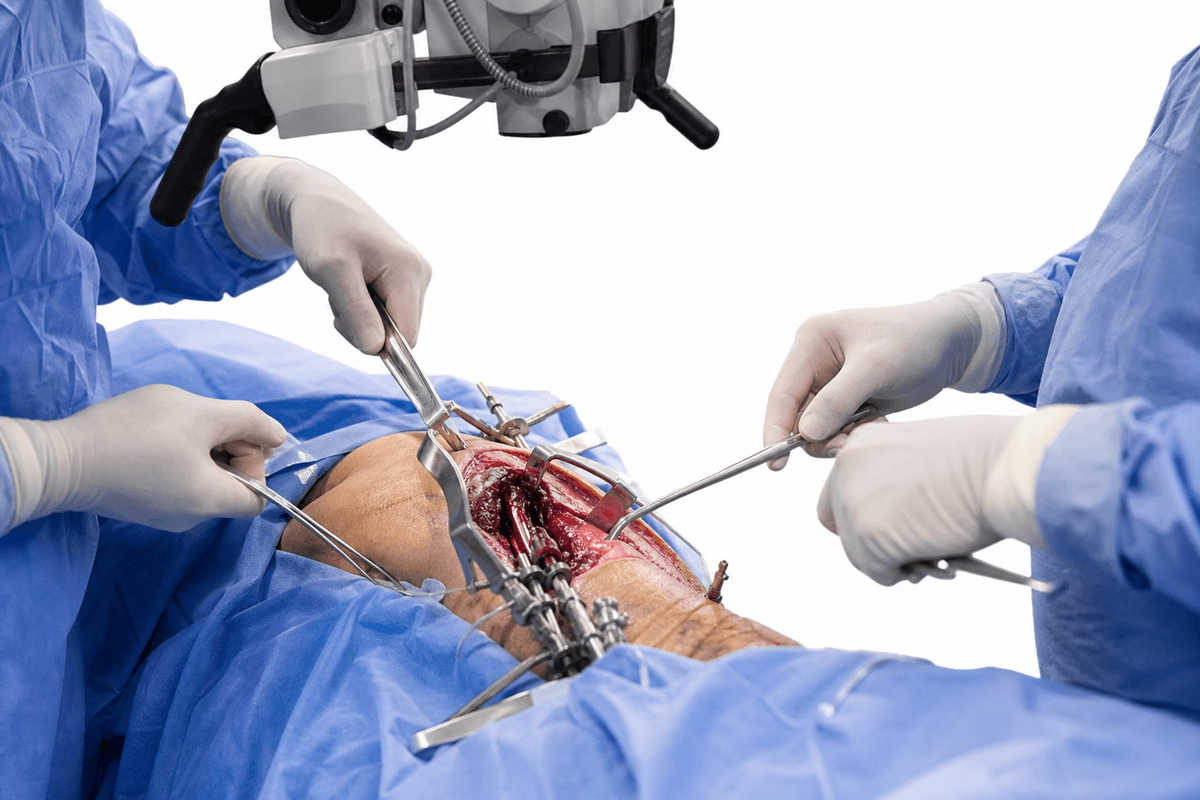
Performed by Dr. Hari Prakash at Dr Hariprakash
Complex trauma refers to serious injuries involving multiple body systems, often from high-energy accidents, falls, or crush injuries. These injuries typically affect bones, joints, soft tissues, and sometimes nerves or blood vessels, requiring coordinated surgical and medical care. Treatment focuses on stabilizing the patient, repairing damaged structures, and restoring function through a staged approach tailored to each person's injuries.
We believe in honest, upfront disclosure so you can make an informed decision.
A step-by-step look at what happens during this procedure.
The patient is stabilized in the emergency department with airway support, fluid resuscitation, and control of bleeding. Life-threatening injuries take priority.
X-rays, CT scans, or MRI scans are performed to identify all fractures, joint injuries, and soft tissue damage. A treatment plan is developed based on findings.
Fractures are stabilized using metal plates, screws, rods, or external fixators. Open wounds are cleaned thoroughly, and damaged soft tissues are repaired or reconstructed.
Additional surgeries may be needed to address bone grafting, tendon or ligament repair, or removal of temporary fixation devices once healing progresses.
Physical therapy begins once healing allows, focusing on restoring strength, range of motion, and function. The timeline varies based on injury severity and healing progress.
A structured, patient-first approach from first consultation to full recovery.
Dr Hariprakash assesses the full extent of musculoskeletal trauma using clinical examination and advanced imaging to identify fractures, dislocations, and soft tissue injuries requiring surgical attention.
A prioritized treatment plan is developed, addressing life- and limb-threatening injuries first, followed by definitive fixation once the patient is medically stable.
Modern fixation methods are used to align and secure broken bones, choosing internal plates and screws or external frames based on fracture pattern, soft tissue condition, and patient factors.
Regular follow-up appointments track healing with repeat imaging, and the rehabilitation plan is adjusted as recovery progresses to support the best possible functional outcome.
What to expect at each stage of your recovery journey.
Pain management, wound care, and prevention of complications like infection or blood clots are the focus. Mobility may be limited, and assistive devices or bed rest may be needed depending on injuries.
Gentle range-of-motion exercises begin under guidance to prevent stiffness. Weight bearing restrictions apply if lower limbs are involved. Timelines vary widely based on injury complexity and healing progress.
Strengthening exercises and functional training gradually resume. Return to work or daily activities depends on the type of work, injury location, and individual healing. Full recovery may take many months.
The goal is to achieve solid bone healing in correct alignment so the limb or joint can bear weight and function. However, some complex fractures may heal with residual stiffness or require further procedures.
Treatment aims to reduce pain and restore as much movement and strength as possible. Complete return to pre-injury function is not always achievable, especially with severe joint or nerve injuries.
Surgery helps prevent problems like non-union, malunion, or chronic instability. Even with optimal care, some patients may experience ongoing pain, arthritis, or need for additional surgeries.
High-energy trauma can cause permanent damage to nerves, blood vessels, or cartilage that surgery cannot fully reverse. Realistic expectations are important, as outcomes depend heavily on injury severity.
The right choice depends on your diagnosis, risks and circumstances — discussed with you at your consultation.
For some less severe or stable fractures, immobilization with casts or braces may be sufficient. This is considered when fracture pattern allows healing without surgery, though it is rarely suitable for complex trauma.
Temporary external frames may be used initially to stabilize fractures when soft tissues are too damaged for immediate internal fixation. Definitive surgery follows once conditions improve, or external fixation remains the final treatment in select cases.
In cases of severe, irreparable limb damage with crushed bone, extensive soft tissue loss, or vascular injury beyond repair, amputation may be considered as a life-saving or function-preserving option. This decision is made carefully based on salvageability, risks, and long-term outcomes.
Let's clear up some of the most common myths about complex trauma.
Get a personalised assessment from an experienced specialist. Understand your options, ask your questions, and decide with confidence.