Treated by Dr. Hari Prakash at Dr Hariprakash
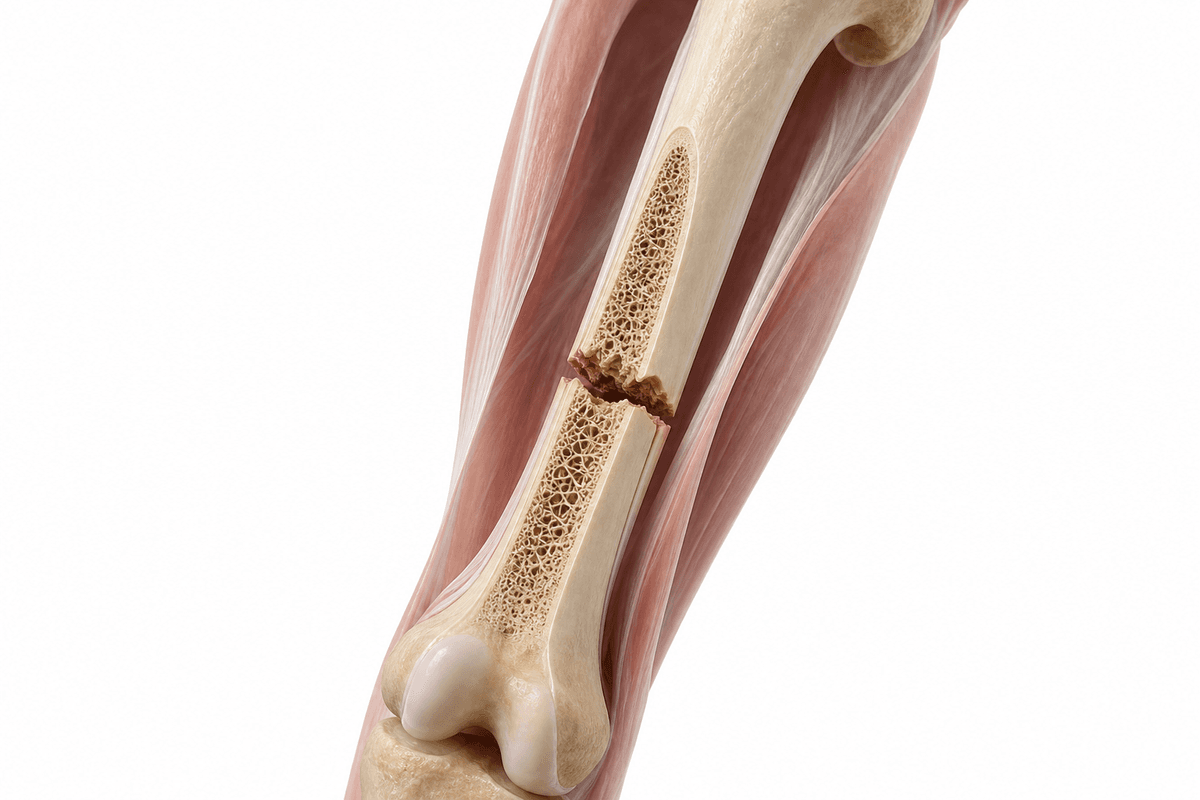
Fractures are breaks or cracks in bones that occur when force exceeds bone strength, commonly seen in Hyderabad due to accidents, falls, and sports injuries. Treatment ranges from simple immobilization to complex surgical intervention depending on fracture type and severity. Dr Hariprakash provides comprehensive fracture care using evidence-based protocols and advanced fixation techniques.
Bone breaks but does not pierce the skin, maintaining soft tissue integrity around the fracture site with lower infection risk and typically requiring conservative management or minimal intervention.
Broken bone penetrates through the skin creating an open wound, significantly increasing infection risk and requiring urgent surgical debridement, fixation, and antibiotic therapy.
Bone shatters into three or more fragments, often resulting from high-energy trauma, requiring surgical reconstruction with plates, screws, or external fixation to restore alignment and stability.
Multiple factors can contribute to the development and progression of this condition.
Fractures develops gradually. Recognising symptoms early gives you more treatment options.
From conservative to surgical — we always start with the least invasive option first.
A structured, patient-first approach from first visit to full recovery.
Dr Hariprakash conducts immediate clinical evaluation including neurovascular status, obtains comprehensive X-rays or CT scans, provides pain management, and applies temporary splinting to prevent further injury.
After analyzing imaging studies, Dr Hariprakash discusses fracture pattern, treatment options ranging from conservative to surgical approaches, expected recovery timeline, and addresses patient concerns with evidence-based recommendations.
Dr Hariprakash performs the selected treatment whether casting, closed reduction, or surgical fixation using advanced techniques and state-of-the-art implants, ensuring optimal bone alignment and stability for proper healing.
Dr Hariprakash provides structured physiotherapy protocols, monitors healing through serial radiographs, adjusts weight-bearing status progressively, and ensures complete functional recovery with regular clinic visits until fracture union.
What to expect at each phase of recovery.
Initial bone callus formation begins with strict immobilization, pain management, elevation to reduce swelling, and protected weight-bearing. Regular follow-up X-rays monitor alignment and early healing progress.
Bone continues mineralization and strengthening with gradual increase in activity, progressive weight-bearing, gentle range-of-motion exercises, and cast removal or hardware stabilization assessment depending on fracture healing.
Bone remodels to pre-injury strength through supervised physiotherapy, strengthening exercises, return to normal activities, and eventual implant removal if indicated. Complete functional recovery achieved with proper rehabilitation.
Successful fracture healing with solid bone continuity, restoration of anatomical alignment, and full structural integrity allowing return to normal weight-bearing and functional activities without pain or limitation.
Recovery of full or near-full range of motion in adjacent joints through proper rehabilitation, with minimal stiffness and optimal limb function enabling resumption of daily activities and sports participation.
Elimination of fracture-related pain with comfortable weight-bearing, normal gait pattern, and ability to perform demanding physical activities without discomfort, swelling, or functional restrictions.
Avoidance of malunion, nonunion, infection, post-traumatic arthritis, and chronic pain through expert treatment and monitoring, ensuring optimal long-term outcomes and quality of life preservation.
Untreated fractures can lead to malunion with permanent deformity, chronic pain, and limb length discrepancy affecting function and mobility. Nonunion may develop where bones fail to heal, requiring complex revision surgery. Complications include post-traumatic arthritis, nerve or vascular damage, chronic instability, and significant disability impacting quality of life and independence.
Seek immediate medical attention if you experience severe pain after injury, visible deformity, inability to move or bear weight on the affected limb, numbness or tingling, or bone protruding through skin. Early evaluation within hours of injury is critical for proper diagnosis and treatment planning. Delays can compromise healing, increase complication risks, and worsen long-term outcomes requiring more extensive interventions.
Early treatment means more options and better outcomes. Book a consultation to understand your condition and explore the right path forward.