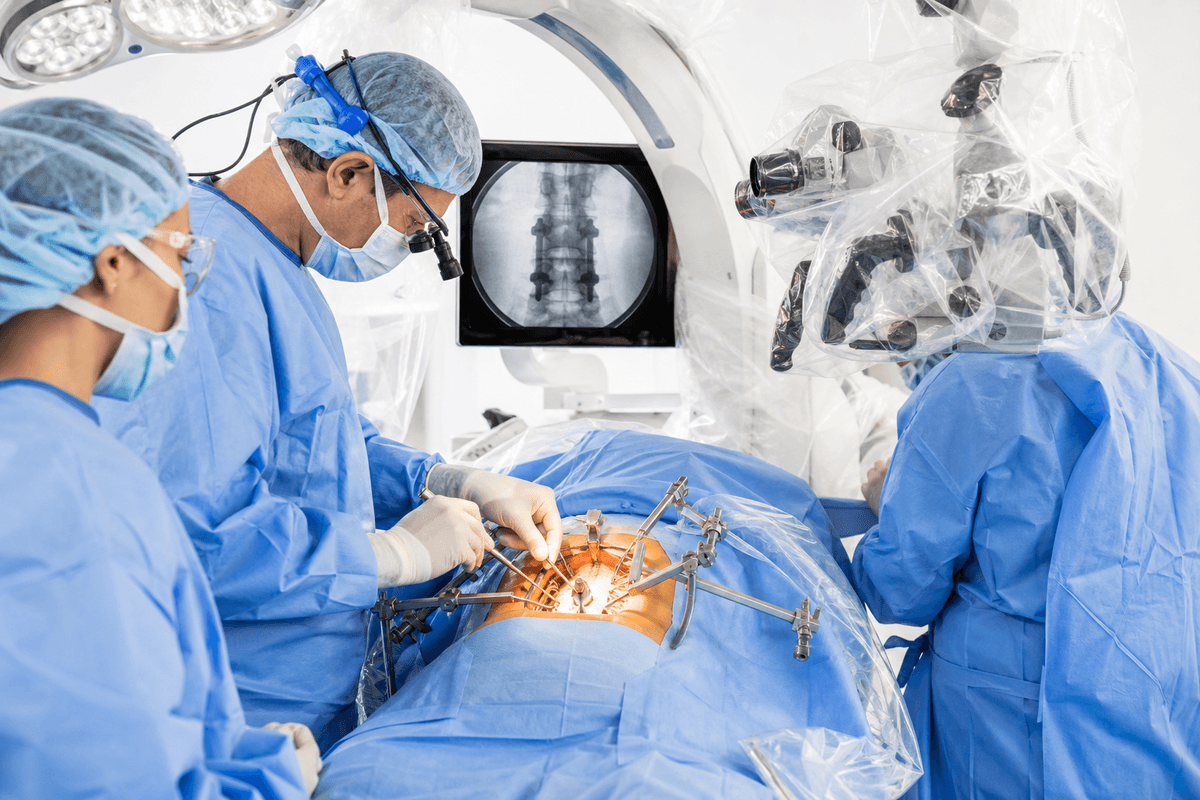
Performed by Dr. Hari Prakash at Dr Hariprakash
Spine Surgeries in Hyderabad address a wide range of spinal conditions including herniated discs, spinal stenosis, degenerative disc disease, and spinal deformities through advanced surgical interventions. These procedures aim to relieve pain, restore spinal stability, and improve neurological function using both traditional and minimally invasive approaches. Dr Hariprakash specializes in comprehensive spine surgery treatments tailored to each patient's specific condition and recovery goals.
We believe in honest, upfront disclosure so you can make an informed decision.
A step-by-step look at what happens during this procedure.
Comprehensive evaluation using MRI, CT scans, and X-rays to identify the exact spinal pathology and plan the surgical approach.
The surgeon makes an incision to access the affected area of the spine, using either traditional open or minimally invasive techniques depending on the condition.
Removal of herniated disc material, bone spurs, or thickened ligaments that are compressing nerves or the spinal cord to relieve pressure.
If needed, insertion of screws, rods, cages, or bone grafts to fuse vertebrae together and restore spinal stability and alignment.
The incision is carefully closed in layers, and the patient is moved to recovery where vital signs and neurological function are closely monitored.
A structured, patient-first approach from first consultation to full recovery.
Dr Hariprakash conducts thorough clinical examination and reviews detailed imaging studies to determine the most appropriate surgical approach for your specific spinal condition.
Each surgery is customized based on the patient's age, condition severity, overall health, and recovery expectations, utilizing advanced minimally invasive techniques whenever possible.
Dr Hariprakash performs the procedure with precision using state-of-the-art equipment and navigation systems to ensure optimal outcomes and minimize tissue damage.
A comprehensive post-operative care plan includes pain management, physiotherapy guidance, and regular follow-ups to monitor healing and ensure successful recovery.
What to expect at each stage of your recovery journey.
The first 3-5 days involve hospital monitoring, pain management, wound care, and gradual mobilization with assistance from nursing staff and physiotherapists.
Weeks 2-8 focus on wound healing, progressive walking, gentle exercises, and wearing a back brace if prescribed while avoiding heavy lifting and bending movements.
Months 3-6 involve structured physiotherapy to strengthen core muscles, improve flexibility, restore normal posture, and gradually return to work and daily activities with full recovery achieved.
Most patients experience substantial relief from chronic back and leg pain, allowing them to resume activities that were previously impossible due to discomfort.
Restoration of nerve function leads to decreased numbness, tingling, and weakness in the extremities, improving overall sensory and motor capabilities.
Fusion procedures provide long-term stability to the affected spinal segments, preventing abnormal motion and reducing the risk of further degeneration.
Patients typically report improved mobility, ability to perform daily tasks independently, better sleep quality, and enhanced overall physical and emotional well-being.
Let's clear up some of the most common myths about spine surgeries.
Get a personalised assessment from an experienced specialist. Understand your options, ask your questions, and decide with confidence.