Performed by Dr. Hari Prakash at Dr Hariprakash
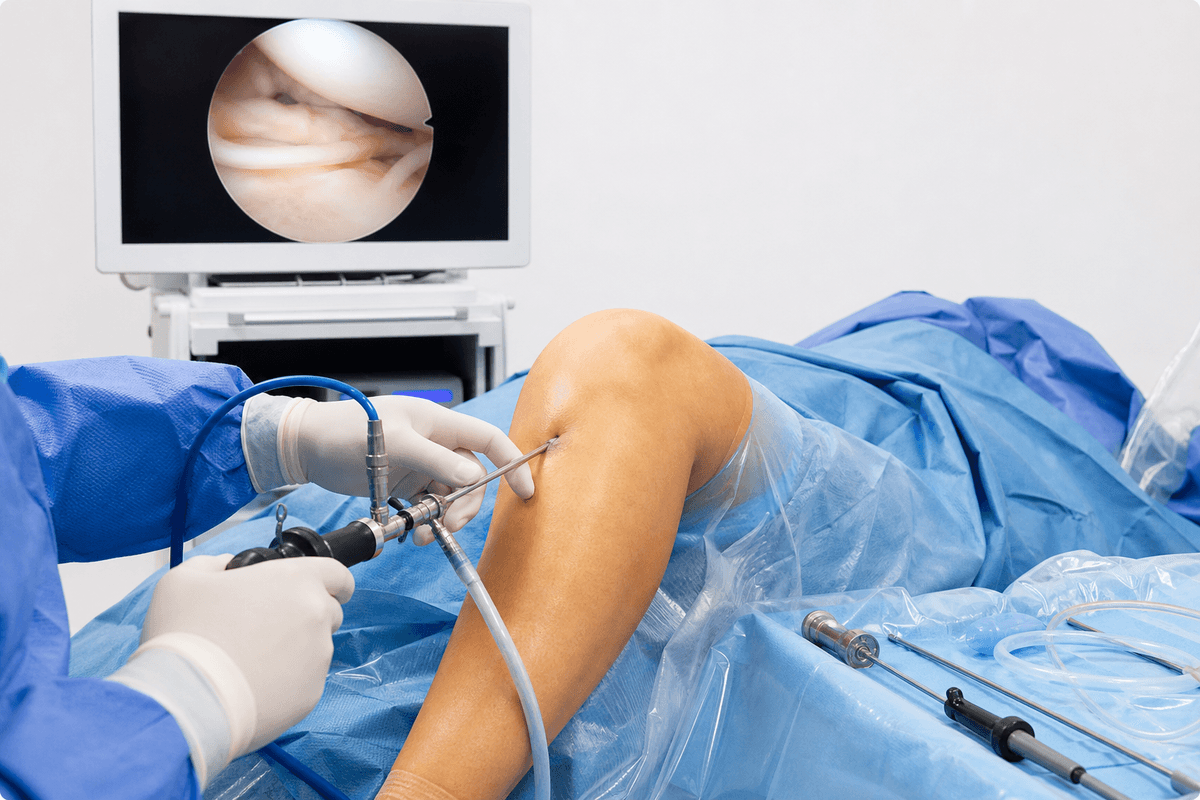
Arthroscopic knee surgery in Hyderabad is a minimally invasive procedure that uses a small camera and specialized instruments to diagnose and treat various knee joint conditions including meniscus tears, ligament injuries, and cartilage damage. This advanced technique involves tiny incisions, resulting in less pain, reduced scarring, and quicker recovery compared to traditional open surgery. Dr Hariprakash, an experienced orthopedic surgeon, specializes in performing advanced arthroscopic knee procedures with precision and care.
We believe in honest, upfront disclosure so you can make an informed decision.
A step-by-step look at what happens during this procedure.
Spinal or general anesthesia is administered to ensure complete comfort during the procedure. The surgical team monitors vital signs throughout the operation.
Small incisions of about 4-5mm are made around the knee joint. An arthroscope with a camera is inserted to visualize the internal knee structures on a monitor.
The surgeon examines the meniscus, cartilage, ligaments, and synovial lining through the arthroscope to identify the exact problem and extent of damage.
Specialized miniature instruments are inserted through additional small incisions to repair torn meniscus, reconstruct ligaments, remove loose bodies, or smooth damaged cartilage.
Instruments are removed, incisions are closed with sutures or surgical tape, and sterile dressings are applied. A compression bandage may be used to minimize swelling.
A structured, patient-first approach from first consultation to full recovery.
Dr Hariprakash conducts thorough clinical examination and reviews MRI or X-ray images to determine if arthroscopy is the optimal treatment approach for your specific knee condition.
A customized surgical plan is developed based on your diagnosis, activity level, and recovery goals. Pre-operative instructions and expected outcomes are clearly explained.
Using state-of-the-art arthroscopic equipment and proven surgical techniques, Dr Hariprakash performs precise repairs with minimal tissue disruption to ensure optimal healing and function.
A comprehensive post-operative rehabilitation protocol is provided including physiotherapy guidance, pain management strategies, and regular follow-up appointments to monitor your progress and ensure complete recovery.
What to expect at each stage of your recovery journey.
First 1-2 weeks focus on rest, ice application, elevation, and gentle range-of-motion exercises. Crutches may be needed for support. Pain medication helps manage discomfort while swelling gradually reduces.
Weeks 2-6 involve progressive physiotherapy to restore strength, flexibility, and stability. Weight-bearing increases gradually under supervision. Most daily activities can be resumed with precautions.
Weeks 6-12 emphasize sport-specific training and advanced strengthening exercises. Most patients return to normal activities by 8-12 weeks, with full athletic activities typically cleared by 3-6 months depending on procedure complexity.
Significant reduction or elimination of chronic knee pain, allowing improved comfort during daily activities and better sleep quality without constant discomfort.
Restoration of normal knee range of motion and flexibility, enabling easier walking, climbing stairs, squatting, and performing routine movements without restriction.
Strengthened knee joint stability reduces episodes of giving way or instability, providing confidence during physical activities and reducing fall risk.
Most patients successfully return to sports, exercise, and recreational activities with proper rehabilitation, experiencing improved quality of life and functional independence.
Let's clear up some of the most common myths about arthroscopic surgeries - knee.
Get a personalised assessment from an experienced specialist. Understand your options, ask your questions, and decide with confidence.