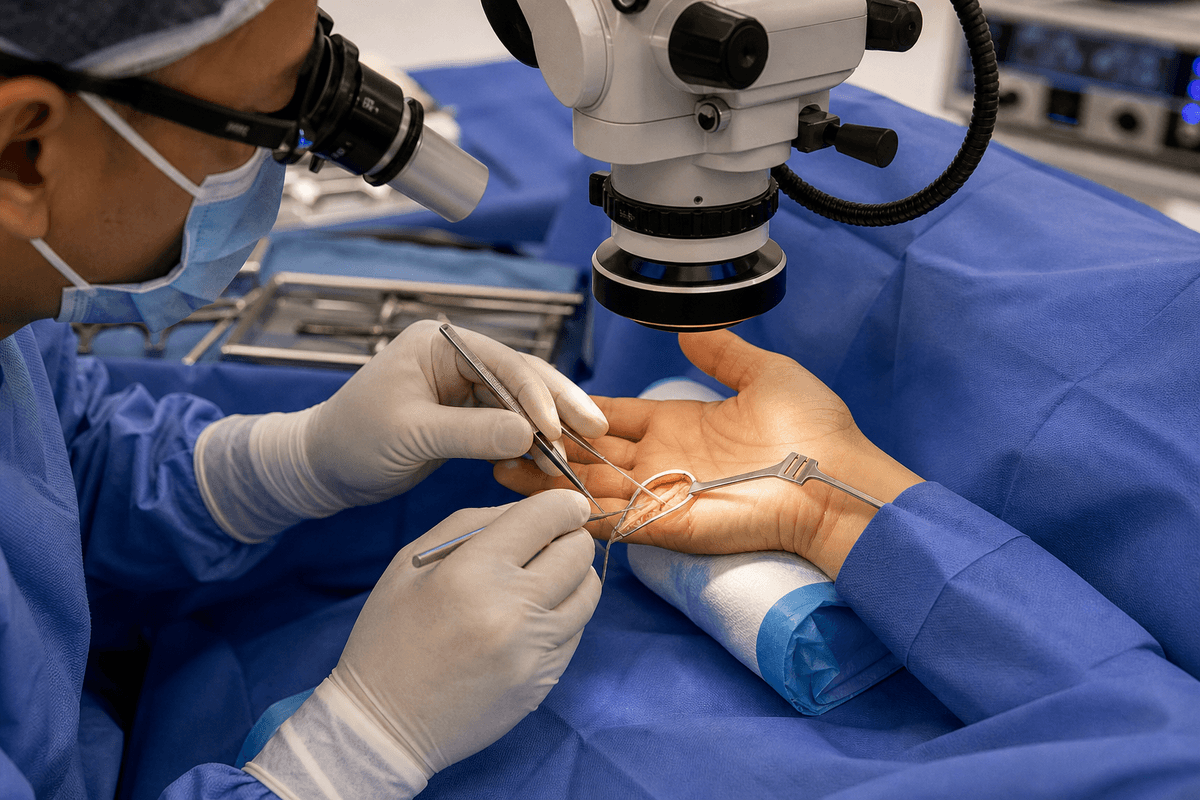
Performed by Dr. Hari Prakash at Dr Hariprakash
Hand and microsurgery is a specialised surgical approach that repairs damaged structures in the hand, wrist and fingers. It addresses injuries to nerves, tendons, blood vessels and bones using magnification and fine instruments. Dr Hariprakash evaluates each case individually to determine whether surgery is appropriate based on the injury type, severity and individual circumstances.
We believe in honest, upfront disclosure so you can make an informed decision.
A step-by-step look at what happens during this procedure.
An incision is made over the injury site to access damaged nerves, tendons, blood vessels or bones beneath the skin.
An operating microscope or magnifying loupes allow the surgeon to see tiny structures clearly and work with precision.
Severed nerves and blood vessels are rejoined using very fine sutures. Tendons are reattached or reconstructed, and broken bones are stabilised with wires, plates or screws.
If replanting a severed part, arteries and veins are reconnected first to restore circulation and ensure tissue survival.
The incision is closed with sutures, and the hand is placed in a splint or cast to protect the repair during early healing.
A structured, patient-first approach from first consultation to full recovery.
Dr Hariprakash assesses the injury, checks sensation, movement and circulation, and orders X-rays or other imaging to understand the extent of damage.
The procedure is tailored to the specific structures injured. Timing, technique and expected recovery are discussed with the patient before surgery.
Using magnification and fine instruments, damaged nerves, tendons, vessels and bones are repaired meticulously to maximise the chance of functional recovery.
Post-operative hand therapy is arranged to guide exercises, splinting and gradual return of function while protecting healing tissues.
What to expect at each stage of your recovery journey.
The hand is kept elevated and immobilised in a splint. Pain is managed with prescribed medication. Wound care instructions are followed to prevent infection.
Gentle passive movements may begin under therapist supervision to prevent stiffness. The splint is adjusted or removed for exercises as healing allows.
Active exercises and resistance training gradually restore grip strength and fine motor skills. Timeline varies widely depending on injury severity and individual healing.
The procedure aims to repair damaged structures and allow gradual return of movement, sensation and grip. Full recovery of pre-injury function is not always possible, especially with severe nerve injuries.
Nerve regeneration is slow, typically advancing one millimetre per day. Complete sensory or motor recovery may take many months and depends on the injury level and patient age.
While tendons can heal and regain strength, some permanent stiffness or reduced range of motion may remain despite rehabilitation.
Injuries involving multiple structures, bone loss or tissue damage may leave residual functional deficits even after successful repair.
The right choice depends on your diagnosis, risks and circumstances — discussed with you at your consultation.
Minor injuries to tendons or nerves without complete rupture may heal with splinting, hand therapy and time. This avoids surgery but is only suitable when structures remain partially intact.
When immediate repair is not possible due to infection, skin loss or unstable fractures, surgery may be delayed. Temporary external fixation or wound care prepares the hand for later definitive repair.
If a severed part cannot be replanted due to severe crush injury, prolonged time since injury or poor blood supply, revision of the amputation stump provides a functional and pain-free result.
Let's clear up some of the most common myths about hand and microsurgery.
Get a personalised assessment from an experienced specialist. Understand your options, ask your questions, and decide with confidence.